Choosing Durable Solid Wood Dressers: Vermont Craftsmanship
A refined guide to enduring bedroom storage, drawn from Vermont's century-old craft ethos and modern, sustainable practices.
In the domestic theater of sleep, a dresser is more than a repository. It is a silent partner in daily rituals: the quiet opening of a drawer at dawn, the carefully aligned stack of sweaters, the grain patterns that tell a story of time, weather, and skill. Vermont, with its long lineage of hand-finished cabinetry and small-batch woodworking, has become a beacon for those who seek longevity, texture, and the quiet luxury of a piece that ages with grace.
This article unpacks the durable solid wood dresser, focusing on materials such as natural cherry, maple, and walnut, and on finishes that reveal grain without masking it. It also offers a practical roadmap for lead times—an important but often overlooked dimension of buying furniture that will outlive your first career—and it foregrounds the joinery that underpins lasting stability. To illuminate the subject beyond the rhetoric, we’ll meet three artisans from distinct periods who illustrate the continuum of craft—from traditional handwork to contemporary Vermont design.
Material Foundations: Wood, Grain, and Grace
Solid wood dressers rely on choices that balance aesthetics, durability, and ease of care. Vermont makers often favor three core species: natural cherry, which offers warm amber tones and a fine, smooth grain; maple, renowned for its pale uniformity and strength; and walnut, prized for its rich chocolate-brown patina and pronounced grain. Each wood comes with its own set of care considerations, especially as it ages and responds to environmental conditions like humidity and temperature.
Finish is not merely cosmetic. An oil-based finish—commonly used by Vermont workshops—penetrates the grain to highlight its natural character while providing a durable, hand-rubbed surface. The result is a tactile experience you can feel: the slight resistance of oiled wood and the soft glow that deepens with time. The choice of finish must harmonize with room lighting, adjacent furniture, and the dresser’s role in daily life, whether it’s a place for small keepsakes or a robust storage system for clothing and linens.
Construction and Longevity: Traditional Joints, Modern Demands
Durability in Vermont dressers often rests on time-honored joinery—dovetails for drawers that glide with quiet precision, finger joints that resist alignment drift, and solid backs that resist warping. Contemporary makers may pair traditional joinery with modern machining for consistency, while preserving the hand-finish ethos that characterizes Vermont’s woodworking culture. Drawer slides, corners, and hardware—when thoughtfully executed—contribute not only to function but to the object’s ability to age gracefully with daily use.
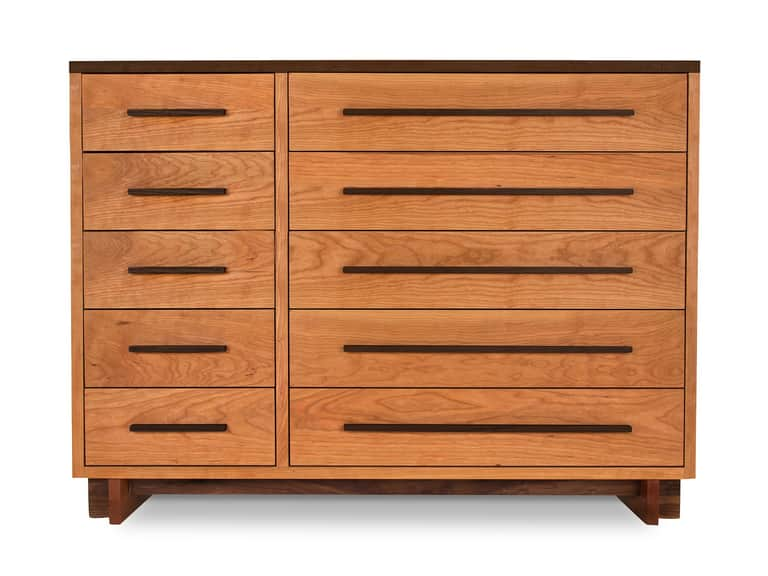
From a buyer’s perspective, the attention to drawer count and configuration matters. The Modern American 10-Drawer Dresser #2 stands out as a case study in durable storage: ten drawers arranged within a clean, contemporary silhouette, finished with an eco-friendly oil that guards grain while keeping maintenance simple. It is a reminder that large dresser components can be both sculptural and utilitarian, creating a calm anchor in the bedroom rather than a cluttered focal point.
Lead Times and Planning: When to Expect Vermont Craft
In a world accustomed to rapid delivery, durable solid wood dressers demand patience. Lead times in this tradition generally range from six to twenty weeks, depending on the chosen wood, the complexity of the finish, and the scale of the piece. Lead times are not mere delays; they reflect the care, the drying cycles, and the meticulous handwork that go into producing heirloom-quality furniture. Planning ahead—especially when refreshing a bedroom—will yield a piece whose finish will deepen with age and whose hardware remains dependable for decades.
A practical approach is to align dresser selection with room renovation timelines. If you’re upgrading a mattress, installing a new closet system, or refreshing a nightstand lineup, the dresser should harmonize with those upgrades in both tone and weight. Vermont makers often offer transparent lead-time windows and scheduling flexibility, enabling buyers to coordinate delivery windows that fit busy households or seasonal weather patterns.
Profiles in Craft: Three Vermont Artisans Across Time
To understand the lineage of durability in solid wood dressers, consider three figures whose work illustrates a trajectory from vernacular craft to contemporary design. Each figure embodies a distinct era, yet all share a commitment to material honesty, structural integrity, and the belief that furniture should serve as a long-term partner in daily life.
-
1) The Early Craftsperson (C19th–Early C20th)
A regional cabinetmaker might have been the backbone of many households, building sturdy chests from locally sourced hardwoods. Their work emphasized joinery that could be repaired and re-finished, often with a minimal, unornate aesthetic. The dresser, in their hands, was not a fashion statement but a functional imperative—drawers that glided with easy leverage, solid rails that resisted racking, and a finish that protected wood through years of daily use. -
2) The Midcentury Reaffirmation (Mid-20th Century)
This era brought a shift toward cleaner lines and more efficient production, but the underlying values remained intact: longevity, utility, and a sense of weight and presence in the room. Vermont’s landscape and timber resources fed a culture of robust frame construction and drawer systems designed to endure. The dresser began to assume a more sculptural role in bedrooms, balancing form with function in a way that anticipated the modern aesthetic. -
3) The Contemporary Vermont Artisan (Late 20th–21st Century)
The present generation blends traditional handcraft with sustainable practices and modern finishes. An artisan today might select natural cherry, maple, or walnut and apply an eco-friendly oil finish that both honors the grain and reduces environmental impact. This lineage culminates in pieces such as the Modern American 10-Drawer Dresser #2, which showcases a generous drawer suite and a disciplined silhouette designed for quiet, everyday use.
Featured Piece: Modern American 10-Drawer Dresser #2
Among the Vermont works cataloged by contemporary shops, the Modern American 10-Drawer Dresser #2 stands as a landmark example of durability and design symmetry. Handcrafted from solid hardwoods, it offers ten drawers with a clean, asymmetrical yet balanced arrangement. The eco-friendly oil finish not only protects the grain but deepens the character of the wood, aging into a warm patina that signals time’s passage with grace rather than wear. It is a testament to how a large storage piece can feel both grounded and of-the-moment, a bridge between heritage craft and modern living.
Configurations include natural cherry, maple, or walnut, each option presenting a distinct personality while sharing a common commitment to long-term usability. The dresser’s lines are calm and authoritative, suitable for bedrooms seeking a sense of order and quiet refinement. It exemplifies the idea that durability can be part of a design’s elegance, not an afterthought to replace novelty with necessity.
Practical Guide: How to Choose, Plan, and Live With Vermont Dressers
When selecting a solid wood dresser, start with a tactile survey of the wood and finish. Visit a showroom or request real-world samples if possible. Examine the drawer glides: should they whisper when opened and close with a controlled, quiet snap? Inspect the drawer interiors for uniform fit and alignment. Look for signs of meticulous joinery, such as closely mated corners and dovetail joints that feel substantial to the touch.
Consider scale in relation to the room. A five-drawer chest may feel lighter and more flexible in a smaller bedroom, while a ten-drawer silhouette, like the Modern American 10-Drawer Dresser #2, offers expansive storage but requires careful spacing and room flow. If space is limited, you might pair a slimmer dresser with a wide mirror and high shelves to create the sense of breadth without crowding the room.
Finally, think about longevity. A dresser’s ability to age gracefully is a function of wood choice, finish, and maintenance. Oils that nourish the timber will need periodic replenishment; climate control will help prevent warping or cracking. A well-chosen Vermont dresser can become a family artifact, aging into a memory of homes past and present alike.
Conclusion: Craft, Culture, and the Quiet Power of a Dresser
In the end, the durable solid wood dresser is more than a storage device. It is a patient steward of daily life, a piece whose value accrues with every careful pull of a drawer and every patina of time across a soft, oil-fed surface. Vermont craftsmanship, with its rooted tradition and responsible modern practices, offers a compelling answer to the modern buyer: durability without sacrifice of beauty, function without noise, and a design that ages with dignity as it holds our garments and keepsakes in quiet, steady balance.
Notes on Listings and Offerings
For readers exploring specific dressers within Vermont Workshop catalogs, a notable exemplar is the Modern American 10-Drawer Dresser #2, which speaks to the intersection of robust construction and contemporary aesthetics. When purchasing, verify wood species options (natural cherry, maple, walnut) and confirm that the finish is oil-based and eco-friendly, aligning with the sustainable ethos of Vermont craftspeople.
If you’re seeking a piece that stocks a broader spectrum of living with storage solutions—from clothing to linens—the dresser family from Vermont Furniture Designs offers a disciplined path to both beauty and utility. The lead times, often in the 16–20 week range, reflect the careful attention to detail and the slow craft that yields heirloom-ready furniture.
Targeted Reading and References
Within this editorial, several sources of inspiration emerge: the lived experience of furniture that ages with grace, the technical discipline of traditional joinery, and the contemporary demand for sustainable finishes. The Vermont craft movement is a living line that connects the past with the present, translating the patient art of woodworking into modern endurance.
For further exploration of dressers and related solid wood pieces, consider examining case studies of Vermont shops and visiting a showroom to experience the tactile warmth of an oiled finish, the subtle depth of cherry’s glow, or walnut’s luxuriant grain. In this light, the dresser becomes not merely a functional object but a curator of memories and daily rituals.